

Regional Challenges Demand Edge Autonomy in Degraded and Denied Environments
Thom Kenney, CEO, Tycho.AI
Since the early days of the Ukrainian conflict, there has been much discussion on the evolution of modern warfare. Though sophisticated technologies and multi-million-dollar cruise missiles still play a role in how we fight, there has been a fundamental shift toward strategic, attritable, one-way attack systems–often in large numbers.
The front lines in Ukraine have become a grueling laboratory for this evolution, specifically regarding electronic warfare. Constant GPS denial, jamming, and spoofing have forced operators to update their software almost daily just to stay ahead of evolving countermeasures.
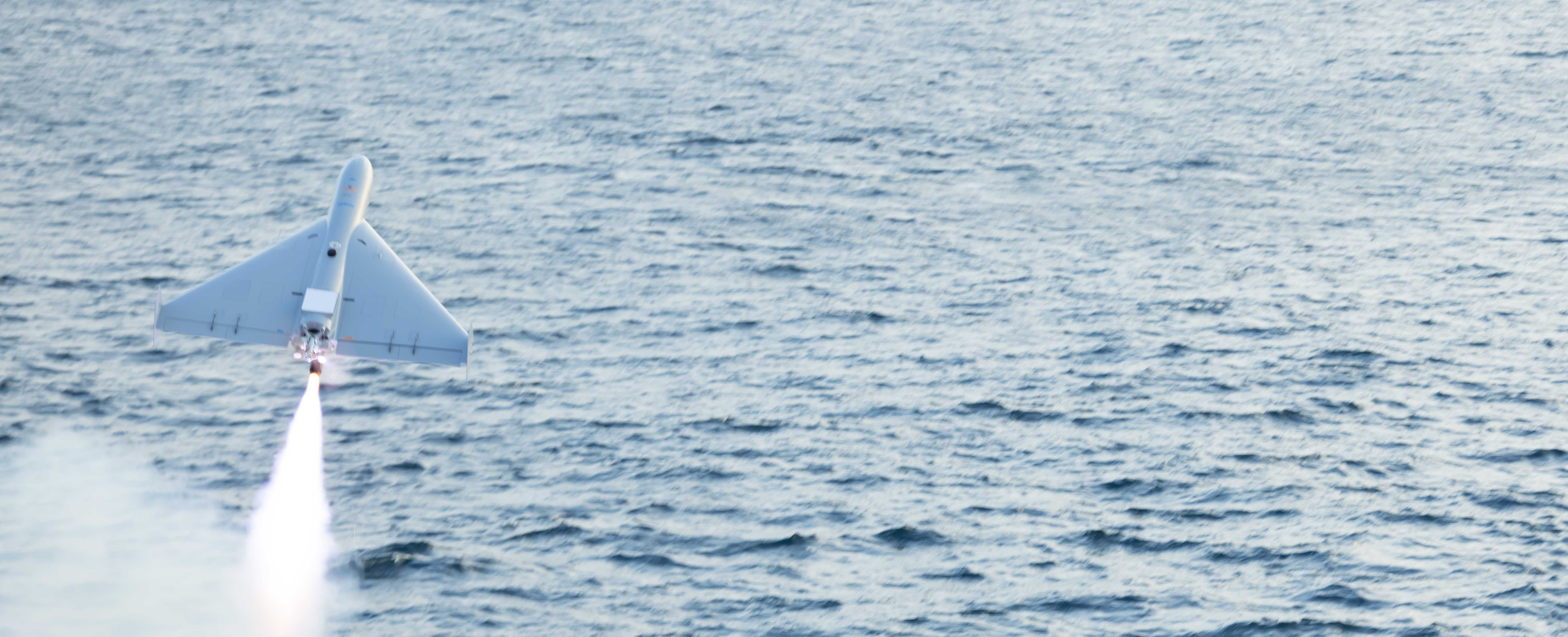
Now, with a full-scale conflict in Iran, we have a better idea of how the U.S. is embracing this shift in its own strategies and tactics. The success of the U.S. Low-cost Uncrewed Combat Attack System (LUCAS) is rapidly redefining our nation’s precision strike capabilities.
While the Middle East and Eastern Europe still garner the lion’s share of global attention with ongoing conflicts, the Department of War has signaled that the Indo-Pacific region remains “the priority theater.”
Admiral Samuel Paparo, Commander of U.S. Indo-Pacific Command (INDOPACOM), reaffirmed this commitment. “Defense in depth means the Pacific is a priority theater, because four of the five priority threats to the United States of America–to the security, freedom, and well-being of the United States–traverse the Indo-Pacific geography.”
As military and industry leaders gather this week in Honolulu, Hawaii, at the National Defense Industrial Association (NDIA)’s Pacific Operational Science & Technology (POST) Conference to collaborate on regional priorities, a critical question is at the forefront: how do these new tactics translate into warfare and defense strategies in INDOPACOM?
While this model offers a blueprint for deterrence, the Indo-Pacific region presents geographic and technical hurdles that differ markedly from those in CENTCOM and EUCOM. These challenges cannot be solved by simply buying more drones. Rather than short-range strikes across land borders or narrow straits, INDOPACOM demands technologies that can operate for long distances over vast ocean spans with limited connectivity. Operations often require complex logistics from ships or remote islands. Enemy targets aren’t always static. They may be moving vessels, requiring AI-enabled seekers that can evade heavy electronic warfare and GPS jamming.
The Strait of Hormuz is an early warning signal of what could play out in any tactical warfare in the South China Sea. There, amid active military operations in Iran and the Gulf, GPS jamming has significantly impacted maritime traffic. Imagine what these conditions could do to our INDOPACOM maritime military operations and to the vast global shipping network spanning the region.
Let us heed the warning. GPS and communications are never guaranteed in the modern battlespace–particularly in the Indo-Pacific. These regional challenges demand multi-sensor fusion, combining Inertial Measurement Units (IMUs) with visual imagery, satellite matching, and AI-powered edge autonomy to equip our autonomous systems with immunity from jamming. With Alternative Positioning, Navigation, and Timing (Alt-PNT) solutions and edge autonomy, we can maintain consistent operations, target stationary and moving targets, and ensure successful missions in degraded and denied environments.
We have these AI-powered navigation systems that can guide uncrewed platforms over large spans of water in remote and contested areas where GPS and communication are unreliable. We have edge autonomy software that can help these platforms complete their missions successfully, even when the link is lost. For INDOPACOM, we must prioritize integrating these capabilities across every uncrewed platform to achieve the next level of overmatch.
The challenge now lies with our industrial base to scale it, with our Congress to keep it funded, and with our military to remain focused on this highest-priority region as we ensure peace through strength in conflicts around the world.
--

About Thom Kenney
Thom Kenney is a serial entrepreneur, combat veteran, and the CEO of Tycho.AI, a Cambridge-based MIT spinout building mission-critical autonomy software and mission-optimized compute hardware for unmanned systems in GPS-denied and comms-contested environments. Thom is also a Senior Fellow at the Belfer Center at Harvard's Kennedy School focussed on emerging tech for defense. Prior to his current roles, he was an engineering director leading AI and digital transformation at Google, and was a Civilian Senior Executive serving as the Chief Data Officer and Head of AI for U.S. Special Operations Command (SOCOM) in Tampa, FL. Thom also served on Defense Science Board as part of the GenAI Task Force. He completed his Senior Service College at Harvard, his MBA at Notre Dame, and his masters in AI at Georgia Tech. Thom currently resides in Boston with his wife Carrie.
About Tycho.AI:
Tycho.AI builds mission-critical autonomy software and mission-optimized compute hardware for unmanned systems in GPS-denied and comms-contested environments. The company’s edge-executable AI enables intelligent navigation and operation without remote control or persistent connectivity, allowing for fully autonomous high-speed and low-altitude operations. Steered by national security experts and MIT-educated engineers, Tycho.AI is reshaping the future of battlefield autonomy. Visit tycho.ai for more information.
Tycho.AI Media Contact:
Ashley Young
256.345.9394
[U.S. Army photo by Spc. Kayla Mc Guire]